
 线程生命周期
# 线程生命周期 🔥
# 五种状态—OS层面
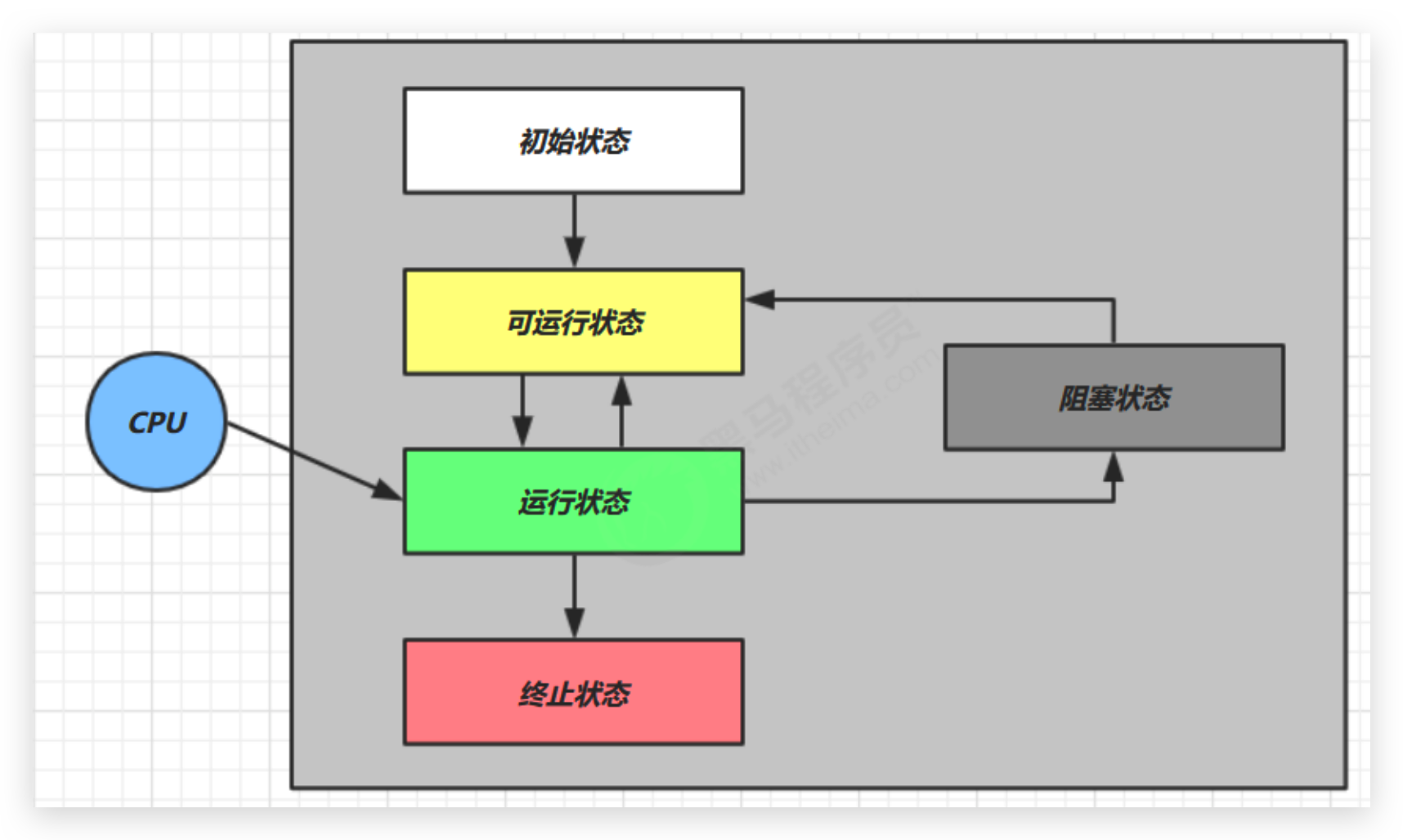
【初始状态】仅是在语言层面创建了线程对象,还未与操作系统线程关联
【可运行状态】(就绪状态)指该线程已经被创建(与操作系统线程关联),可以由 CPU 调度执行
【运行状态】指获取了 CPU 时间片并运行中的状态
当 CPU 时间片用完,会从【运行状态】转换至【可运行状态】,会导致线程的上下文切换
【阻塞状态】
如果调用了阻塞 API,如 BIO 读写文件,这时该线程实际不会用到 CPU,会导致线程上下文切换,进入【阻塞状态】,等 BIO 操作完毕,会由操作系统唤醒阻塞的线程,转换至【可运行状态】
与【可运行状态】的区别是,对【阻塞状态】的线程来说只要它们一直不唤醒,调度器就一直不会考虑调度它们
【终止状态】表示线程已经执行完毕,生命周期已经结束,不会再转换为其它状态
# 六种状态—Java层面
常用方法:
boolean isAlive():判断线程是否还存活,还没有运行完毕Enum getState():获取线程状态
当线程被创建并启动以后,它既不是一启动就进入了执行状态,也不是一直处于执行状态。在线程的生命周期中, 有几种状态呢?在 API 中 java.lang.Thread 中的State内部枚举类中给出了六种线程状态:
新建:当一个 Thread 类或其子类的对象被声明并创建时,但是并未启动即调用
start(),新生的线程对象处于新建状态NEW:Thread state for a thread which has not yet started.
可运行:处于新建状态的线程被
start()后,可能正在 JVM 中执行,也可能正在等待来自操作系统的其他资源如处理器RUNNABLE:state for a runnable thread. A thread in the runnable state is executing in the Java virtual machine but it may be waiting for other resources from the operating system such as processor.
阻塞:当一个线程试图获取一个对象锁,而该对象锁被其他的线程持有,则该线程进入 Blocked 状态;当该线程持有锁时,该线程将变成 Runnable 状态。
BLOCKED:Thread state for a thread blocked waiting for a monitor lock.A thread in the blocked state is waiting for a monitor lock to enter a synchronized block/method or reenter a synchronized block/method after calling
Object.wait.无限等待:一个线程在等待另一个线程执行一个(唤醒)动作时,该线程进入 Waiting 状态。这个状态后是不能自动唤醒的
WAITING:state for a waiting thread.A thread is in the waiting state due to calling one of the following methods:
Object.waitwith no timeoutth.joinwith no timeoutLockSupport.parkA thread in the waiting state is waiting for another thread to perform a particular action.
For example, a thread that has called
Object.wait()on an object is waiting for another thread to callObject.notify()orObject.notifyAll()on that object. A thread that has calledth.join()is waiting for a specified thread to terminate.计时等待:同 waiting 状态,有几个方法有超时参数,调用他们将进入 Timed Waiting 状态。这一状态将一直保持到超时期满或者接收到唤醒通知。
TIMED_WAITING:Thread state for a waiting thread with a specified waiting time. A thread is in the timed waiting state due to calling one of the following methods with a specified positive waiting time:
Thread.sleepmust with timeoutObject.waitwith timeoutth.joinwith timeoutLockSupport.parkNanosLockSupport.parkUntil
被终止:因为
run方法正常退出而终止(完成全部工作),或者因为没有捕获的异常终止了run方法而死亡,或者或线程被提前强制性地中止。TERMINATED:Thread state for a terminated thread. The thread has completed execution.
@Slf4j(topic = "TestState")
public class TestState {

    public static void main(String[] args) throws InterruptedException {

        // NEW
        Thread t1 = new Thread(() -> log.debug("{} running", Thread.currentThread().getName()), "t1");


        // RUNNABLE
        Thread t2 = new Thread(() -> {
            while (true){
                // TODO
            }
        }, "t2");
        t2.start();


        // TERMINATED
        Thread t3 = new Thread(() -> log.debug("{} running", Thread.currentThread().getName()), "t3");
        t3.start();


        // TIMED_WAITING
        Thread t4 = new Thread(() -> {
            synchronized (TestState.class){
                try {
                    TimeUnit.SECONDS.sleep(100);
                } catch (InterruptedException e) {
                    e.printStackTrace();
                }
            }
        }, "t4");
        t4.start();


        // WAITING
        Thread t5 = new Thread(() -> {
            try {
                t2.join();
            } catch (InterruptedException e) {
                e.printStackTrace();
            }
        }, "t5");
        t5.start();


        // BLOCKED
        Thread t6 = new Thread(() -> {
            synchronized (TestState.class){
                try {
                    TimeUnit.SECONDS.sleep(100);
                } catch (InterruptedException e) {
                    e.printStackTrace();
                }
            }
        }, "t6");
        t6.start();


        TimeUnit.MILLISECONDS.sleep(500);

        log.debug("T1 state {}", t1.getState());
        log.debug("T2 state {}", t2.getState());
        log.debug("T3 state {}", t3.getState());
        log.debug("T4 state {}", t4.getState());
        log.debug("T5 state {}", t5.getState());
        log.debug("T6 state {}", t6.getState());
    }
}
2
3
4
5
6
7
8
9
10
11
12
13
14
15
16
17
18
19
20
21
22
23
24
25
26
27
28
29
30
31
32
33
34
35
36
37
38
39
40
41
42
43
44
45
46
47
48
49
50
51
52
53
54
55
56
57
58
59
60
61
62
63
64
65
66
67
68
69
70
释放锁和不释放锁的操作(未完)
释放锁的操作
- 当前线程的同步方法、同步代码块执行结束。
- 当前线程在同步代码块、同步方法中遇到break、return 终止了该代码块、该方法的继续执行。
- 当前线程在同步代码块、同步方法中出现了未处理的 Error 或 Exception,导致异常结束。
- 当前线程在同步代码块、同步方法中执行了线程对象的**
wait()方法,当前线程暂停,并释放锁**。
不释放锁的操作
线程执行同步代码块或同步方法时,程序调用
Thread.sleep()、Thread.yield()方法暂停当前线程的执行线程执行同步代码块时,其他线程调用了该线程的
suspend()方法将该线程 挂起,该线程不会释放锁(同步监视器)应尽量避免使用
suspend()和resume()来控制线程